Latest insights
Pergola vs Patio Cover: 5 Factors That Define Your Choice

October 28, 2026
By D.A.D.S. Construction
Last Updated: October 26, 2026
Quick Summary
A pergola vs patio cover comes down to shade needs and weather protection: pergolas have slatted roofs allowing filtered sunlight and airflow but provide only 30-50% shade with no rain protection, while patio covers feature solid roofs that block most sun and protect from rain but create a more enclosed feeling.
- Pergolas provide 30-50% shade coverage while patio covers provide full shade
- Wood lattice pergolas need staining or sealing every 2-3 years
- Louvered roofs offer adjustable slats for flexibility between airflow and rain protection
- Solid patio covers become essential in desert climates where temperatures regularly exceed 100 degrees
- Freestanding structures need proper footings 18-36 inches deep depending on your region
Table of Contents
- Pergola vs Patio Cover: Key Differences
- Pergola Shade Options and Performance
- Pergola Pros and Cons
- Patio Cover Cost and Value
- Best Patio Cover for Hot Climates
- Building Codes, Permits, and Structural Requirements
- Choosing Based on Your Backyard and Budget
- Getting Your Custom Shade Structure Built
- Frequently Asked Questions
Pergola vs Patio Cover: Key Differences
Choosing between a pergola and a patio cover shapes how you'll use your backyard for years to come. Both structures provide outdoor shade, but they work in fundamentally different ways. Understanding those differences is the first step toward picking the right solution for your property and climate.
A pergola is an open-air structure with a slatted or latticed roof that allows filtered sunlight and airflow to pass through. A patio cover is a solid or semi-solid roof system that blocks most or all direct sun. The choice between them depends on how much shade you need, how much rain protection matters, and what aesthetic you're after.

The real decision comes down to shade coverage, weather protection, maintenance, and how your backyard actually functions.
How Shade Coverage Differs
The trade-off: full shade feels enclosed. Some people prefer the openness of a pergola even if it means less cooling. Others want the patio cover's aggressive heat rejection and don't mind the enclosed feeling.
Weather and Rain Protection
There's a middle ground: louvered roofs. These have adjustable slats that you can open for airflow on cool days or close for rain protection when a storm rolls in. They give you flexibility that a fixed structure can't match.
Pergolas and patio covers differ fundamentally in how they provide shade and weather protection.
| Feature | Pergola | Patio Cover |
|---|---|---|
| Roof type | Slatted or latticed | Solid or semi-solid |
| Sunlight | Allows filtered sunlight through | Blocks most or all direct sun |
| Rain protection | Does not protect from rain | Provides rain protection |
| Shade coverage | Provides only partial shade (30-50%) | Provides full shade |
| Airflow | Maintains airflow | More enclosed feeling |
Pergola Shade Options and Performance
Pergolas come in several configurations, each with different shade and weather performance. The structure you choose determines how much sun actually reaches the ground and how the space feels.
Open Lattice and Slatted Designs
Maintenance is straightforward. Wood lattice needs occasional staining or sealing, typically every 2-3 years depending on your climate. Metal slats require less upkeep but can develop rust if not properly finished.
Retractable and Adjustable Systems
Adjustable Pergolas(page:1) offer this kind of control.
Pergola Pros and Cons
Pros:
- Open design feels less enclosed and maintains airflow
- Lower upfront cost than solid patio covers
- Allows filtered sunlight for plants and natural light
- Simpler installation for fixed lattice designs
- Works well in cooler climates where some sun is desirable
Cons:
- Doesn't protect from rain
- Provides only partial shade (30-50% sun blocking)
- Not effective for extreme heat management
- Fixed lattice designs offer no flexibility
- Requires regular maintenance if wood-based
Patio Cover Cost and Value
The value calculation depends on how you use your outdoor space. If you're outside during peak heat hours regularly, a solid cover pays for itself in comfort and usability. If you mainly use the space early morning or evening, a pergola might be sufficient.
Installation and Long-Term Maintenance
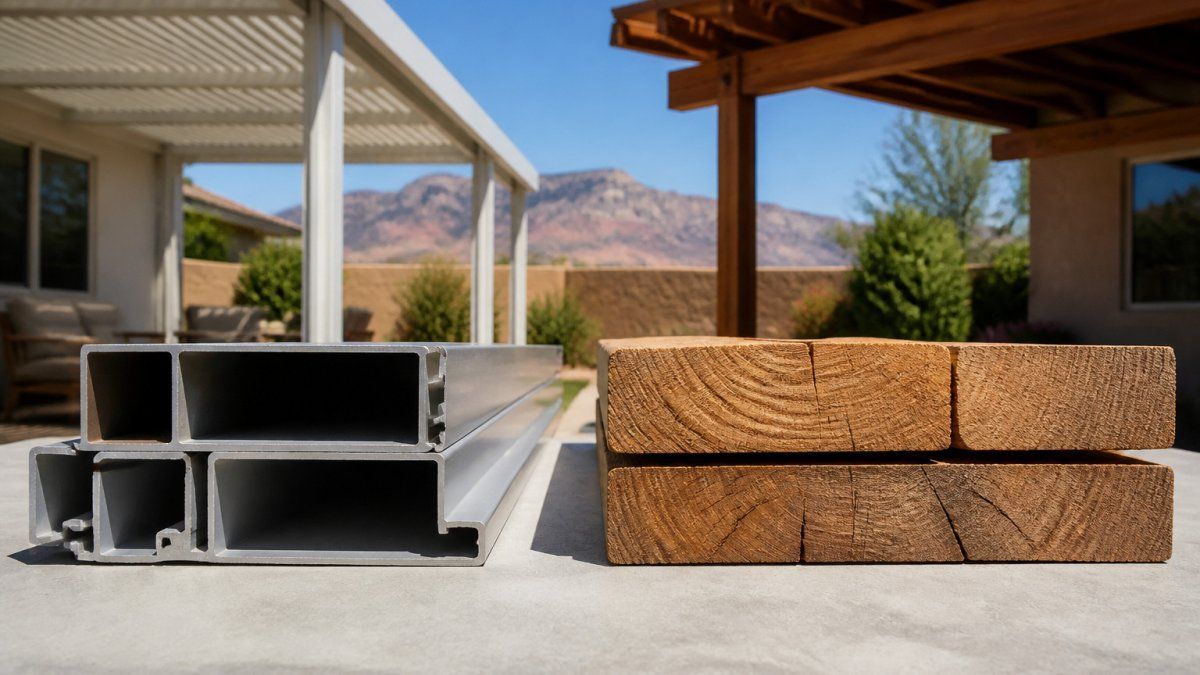
Long-term maintenance depends on materials. Metal frames with solid panels (aluminum or polycarbonate) need minimal upkeep, occasional cleaning and checking fasteners. Wood frames need staining or sealing every 2-3 years. Fabric panels, if part of a retractable system, have a lifespan of 5-10 years before they need replacement.
Best Patio Cover for Hot Climates
In desert environments where temperatures regularly exceed 100 degrees, a solid patio cover becomes essential for making outdoor space usable. Partial shade from a pergola simply doesn't cut it during peak heat hours.
Solid Roofs vs Open Designs
Open-design covers with partial slats (like louvered systems) split the difference. They block significant heat while maintaining some visual openness and airflow. You won't get the full cooling of a solid roof, but you get more than a pergola provides.
Materials That Handle Desert Heat
Metal roofing (standing seam or corrugated) is extremely durable in desert conditions. It reflects sunlight effectively, reducing heat buildup. The downside is noise, rain on metal is loud, and wind can create vibration.
Building Codes, Permits, and Structural Requirements
Freestanding structures have fewer restrictions but still need proper footings below the frost line (typically 18-36 inches deep, depending on your region). A freestanding pergola or cover needs to be stable enough to withstand wind and not shift over time.
Choosing Based on Your Backyard and Budget
Climate is the deciding factor for most people. In desert heat, a solid cover becomes essential. In milder climates, a pergola might be perfect. A hybrid approach, pergola over a seating area, patio cover over a dining table, lets you optimize different zones.
Getting Your Custom Shade Structure Built
Contact D.A.D.S. Construction(page:4) to discuss your backyard and what you're trying to achieve.
The decision between a pergola and patio cover isn't complicated once you understand what each one delivers. The key is matching the structure to how you actually plan to use your backyard. We've helped homeowners across the region make this choice and build structures they love. If you're ready to explore options for your property, reach out to our team(page:4) and we'll walk you through the process from design through installation.
Frequently Asked Questions
How much shade does a pergola provide compared with a patio cover?
A pergola with open lattice or slatted roof provides 30-50% shade, allowing dappled sunlight and airflow. A solid patio cover blocks 80-100% of direct sun and rain. For hot climates, solid patio covers offer superior sun protection, while pergolas work better if you want partial shade and ventilation. Your choice depends on how much heat reduction you need and whether you prioritize airflow.
What are the disadvantages of a pergola?
Pergolas offer limited rain protection because of their open or slatted design. They provide only partial shade, so they're less effective in extreme heat. Open designs require more frequent cleaning due to debris accumulation. Moving parts on retractable pergolas can need maintenance. If you want full weather protection and maximum cooling in a desert climate, a solid patio cover performs better.
Is a solid patio cover better than a pergola for blocking direct sun?
Yes. A solid patio cover blocks 80-100% of UV rays and direct sun, while a pergola with open slats blocks only 30-50%. In hot climates, solid covers reduce temperatures underneath by 10-15 degrees Fahrenheit more effectively than pergolas. However, solid covers limit airflow and ventilation. Choose a solid cover if sun protection and heat reduction are your priorities; choose a pergola if you want partial shade with better air circulation.
Which is better for a hot, sunny backyard: a pergola or a patio cover?
A solid patio cover is better for extreme heat because it blocks more direct sun and reduces surface temperatures significantly. Patio covers also protect furniture and outdoor spaces from UV damage and intense heat radiation. Pergolas work well if you want some shade with airflow and don't mind partial sun exposure. In desert climates, most homeowners choose solid patio covers for comfort and protection, then add a pergola elsewhere for aesthetics and partial shade.
GARAGE DOOR INSIGHTS
More from Liftworks Overhead Door Services