Latest insights
Aluminum vs Wood Patio Covers for Southern Utah Heat

November 3, 2026
By D.A.D.S. Construction
Quick Summary
Aluminum patio covers generally offer better patio covers durability in Southern Utah's intense sun, since they resist rot and insects and need little upkeep. Wood provides a warmer natural look but requires regular sealing and inspection to avoid cracking and moisture damage. For most low-maintenance buyers, aluminum is the practical default.
- Aluminum is not affected by rot or insect damage, unlike untreated wood.
- Wood requires regular sealing or staining, while aluminum mostly needs cleaning.
- Coated aluminum can last 25 to 40 years with quality construction and care.
- Maintained pressure-treated wood can last 15 to 25 years with proper detailing.
- Roof pitch, flashing and post bases often shorten a cover's life more than material choice.
Table of Contents
- How Aluminum and Wood Patio Covers Compare Overall
- Durability and Expected Lifespan of Each Material
- Wood Patio Cover Maintenance and Upkeep Requirements
- Alumawood Patio Cover Finish, Appearance, and Product Quality
- Initial Cost, Lifecycle Value, and Repairability
- Wind, Snow, and Structural Load Considerations
- Choosing the Right Patio Cover for Your Southern Utah Yard
- Frequently Asked Questions
How Aluminum and Wood Patio Covers Compare Overall
Last Updated: November 3, 2026

Choosing between aluminum and wood for a patio cover in Southern Utah comes down to how each material handles sun, heat and time, and which option delivers the patio covers durability you need for your yard. For a side-by-side look at patio covers alongside other outdoor structures, see our complete outdoor living guide.
The comparison below summarizes the main differences. These are general patterns, not guarantees, and results depend on product quality, installation and care.
| Factor | Aluminum | Wood |
|---|---|---|
| Rot and insect damage | Not affected | Vulnerable without treatment |
| Maintenance | Low, mostly cleaning | Regular sealing or staining |
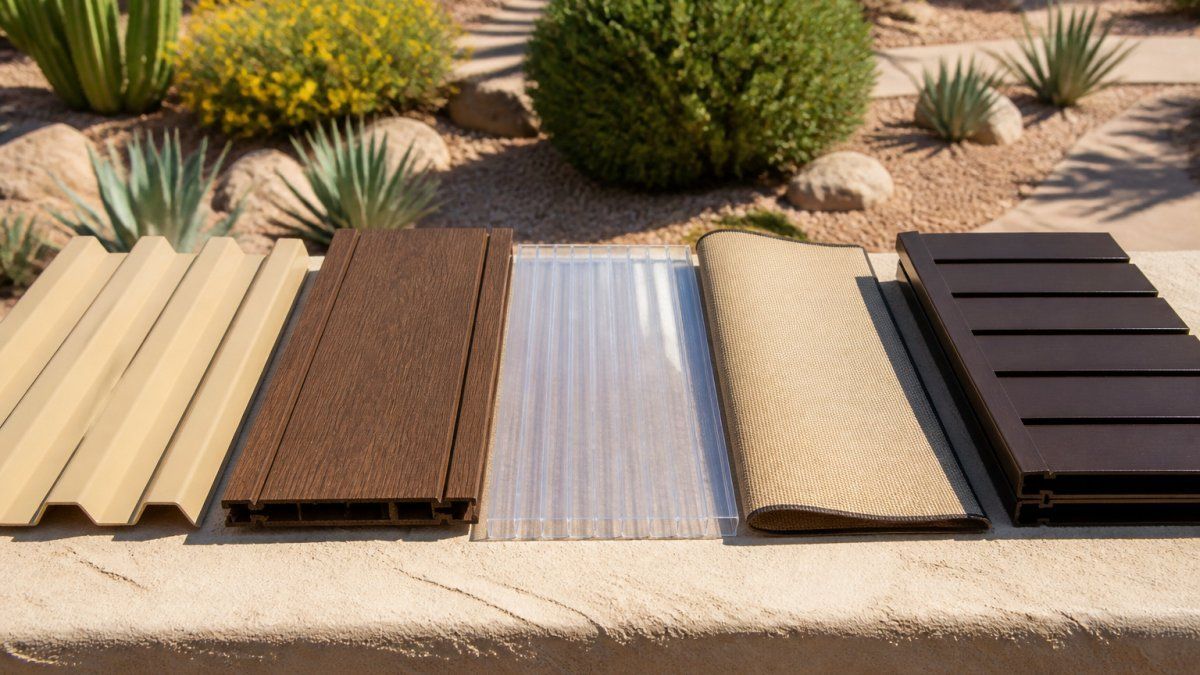
| Look | Clean, uniform, painted finishes | Natural grain, warm character |
| Customization | Limited to standard profiles | Easy to adjust on site |
| Upfront cost | Often competitive | Varies with species and grade |
Pros of wood: It offers natural beauty, a traditional feel and easy modification. Cons of wood: It requires ongoing sealing, it can crack or warp under strong sun if neglected, and it is more exposed to moisture damage.
Durability and Expected Lifespan of Each Material
Patio cover durability depends on several factors, and neither material has a single lifespan. Service life is a function of four variables: climate exposure, product grade, installation detailing, and maintenance discipline.
Lifespan Ranges With Stated Assumptions
| Material and grade | Realistic service life | Assumptions behind the range |
|---|---|---|
| Coated aluminum, quality system | 25-40 years | Structural-grade extrusions, factory powder coat or coil coating, correct anchoring, annual wash-down |
| Aluminum, low-grade or thin-gauge product | 10-20 years | Thin walls, thin or field-painted finish, poor drainage detailing, coastal salt exposure |
| Pressure-treated wood, maintained | 15-25 years | Ground-contact-rated treatment, annual inspection, reseal every 2-3 years, good roof pitch and flashing |
| Wood, neglected or untreated | 8-15 years | No sealing, poor drainage, soil contact at posts, high UV or repeated wet-dry cycles |
| Naturally durable species (cedar, redwood, cypress) | 15-30 years | Heartwood content, raised off grade, sealed, moderate climate |
A common pattern is that the spread within one material is wider than the spread between materials. A neglected quality aluminum cover and a neglected cedar cover can both fail early; a well-detailed pressure-treated cover can outlast a cheap aluminum one. The material sets the ceiling; the details set where you land under it.
Why Climate Shifts the Range
In hot, dry, high-UV climates, wood fails primarily through surface degradation: lignin breaks down under ultraviolet light, the surface grays and checks, and unchecked cracks admit water that drives rot at joints and post bases.
In wet or humid climates, the failure modes flip. Wood is at continuous risk of rot and insect attack unless it is treated, detailed for drainage, and kept off the ground.
What Actually Shortens Life
The details that most often cut a cover's life short are the same for both materials:
- Roof pitch and drainage. A shallow pitch that lets water pond or back up under flashing will rot wood and stain or corrode aluminum.
- Post bases and ground clearance. Wood posts set in soil or concrete without a standoff wick moisture upward. Aluminum posts need isolation from concrete and dissimilar metals to avoid corrosion at the base.
- Flashing and penetrations. Poor flashing at the house attachment is the single most common leak path, and leaks damage the structure behind the cover regardless of material.
- Fasteners. Untreated or mismatched fasteners rust and stain wood and initiate corrosion on aluminum.
- Maintenance intervals. Wood that goes more than a few seasons without resealing loses its UV protection; aluminum that is never washed accumulates debris that holds moisture against the finish.
Watch out: a contractor who quotes a lifespan without asking about your roof pitch, post embedment, and local wind and snow exposure is quoting a material, not a building.
How to Verify Lifespan Claims
Ask for the finish warranty in writing and read what it excludes, fading, chalking, and coastal exposure are commonly carved out. For wood, ask for the treatment rating (ground-contact versus above-ground) and the species. For aluminum, ask for the alloy, the wall thickness of the extrusions, and the coating system. Those specifications, not the marketing lifespan, determine how long the cover actually lasts.
Wood Patio Cover Maintenance and Upkeep Requirements
Wood covers need a consistent maintenance schedule to perform well. Inspect the cover at least once a year for cracks, loose joints, soft spots and fastener corrosion. Clean the surface, let it dry fully, and reapply a UV-blocking sealer or stain as the product label recommends.
Common mistakes include waiting too long to reseal, using a film-forming finish that peels, and ignoring small cracks that let water in. Address these early, since repairs become more expensive once rot or insect damage spreads.
Alumawood Patio Cover Finish, Appearance, and Product Quality
When you compare Alumawood or any aluminum cover, ask about the finish warranty, the thickness of the aluminum components and the type of coating used. Those details determine how the cover looks after several years of exposure.
Initial Cost, Lifecycle Value, and Repairability
Pricing depends on size, design, material grade, site conditions and labor. We serve homeowners in Washington City, UT, so you can get local pricing for your yard.
Lifecycle value is often the better comparison. A cover that needs less maintenance and lasts longer may cost less over its life, even if the initial price is higher.
Repairability also differs. Wood can be patched, replaced board by board, and modified on site, which is a real advantage for owners who like to make changes.
Wind, Snow, and Structural Load Considerations
Material choice does not determine whether a patio cover survives a storm. Structural performance is set by engineering: span, member size, connection details, anchoring, and the load assumptions the design was built to. A quality aluminum cover engineered for local loads will outperform a heavy wood cover that was undersized or poorly anchored, and vice versa. In hot, sunny conditions, louvered roof options can also adjust for shade and airflow. This is the part of the comparison most material-focused articles skip.
The Loads a Cover Must Resist
A patio cover is a structure, and it is designed against several load types at once:
- Dead load. The weight of the members, roofing, and any attached fixtures such as fans, lights, or speakers. Aluminum's lighter dead load is an advantage because it reduces demand on the supporting structure.
- Live load. Temporary loads such as maintenance workers or debris. Roof structures are designed for a minimum live load even when no one is expected on top.
- Snow load. Ground snow load varies widely by region and is mapped in the building code; roof snow load depends on exposure, roof slope, and whether the surface is slippery. A shallow-pitch cover in a snow region accumulates more load than a steeper one.
- Wind load. Wind produces both downward pressure and uplift. Uplift is often the governing case for lightweight patio covers, because a cover is essentially a wing that wind tries to lift off its posts and its attachment to the house.
- Rain and ponding. A roof that deflects enough to pond water adds load and accelerates deterioration.
Why Span and Anchoring Matter More Than Material
Every cover has a load path: roof surface to purlins or rafters, to beams, to posts, to footings, and to the house attachment. Durability depends on every link in that path being sized for the load.
- Span. The distance between posts sets the required beam and rafter depth. Longer spans need deeper members regardless of material. Aluminum systems often use engineered beams and trusses to achieve spans that would require large wood members, which is one reason aluminum covers can feel more open.
- Post sizing and footings. Posts must be sized for the combined axial and bending loads and anchored to footings designed for uplift. A common failure is a post that is adequate in compression but pulls out of its base under wind uplift.
- House attachment. The ledger or attachment to the house carries a large share of the load and must be flashed and fastened per code. This connection is where most wind and water failures begin.
- Bracing. Lateral bracing resists racking under wind. Wood covers often rely on diagonal bracing or sheathing; aluminum systems use engineered brackets and gussets.
Watch out: a cover that looks solid but is fastened to the house with undersized lag screws and no flashing is a wind and water liability, no matter how thick the material is.
The Code Framework
Residential patio covers are typically regulated under the International Residential Code (IRC), which is adopted with local amendments in most jurisdictions. The IRC references ASCE 7 for determining wind, snow, and other loads, and it sets prescriptive requirements for footing size, post anchorage, and connection hardware. Local building departments may add requirements for wind-borne debris, snow drift, or seismic bracing.
What to Ask Before You Build
- What design wind speed and ground snow load were used, and do they match the local code?
- What is the maximum span between posts, and how was the beam sized for it?
- How are the posts anchored, and what footing size and depth are specified?
- How is the cover attached to the house, and how is that connection flashed?
- Are the fasteners and hardware rated for the exposure and compatible with the material?
- Does the plan carry an engineer's stamp or a manufacturer's engineered design for the local loads?
A cover that is engineered and inspected is durable in a way that material alone cannot guarantee. That is the real durability story: the material sets the maintenance profile, but the engineering sets whether the structure is still standing after the first big wind or snow event.
Choosing the Right Patio Cover for Your Southern Utah Yard
For many homes in Southern Utah, aluminum can suit owners who want durable shade that handles intense sun and needs little upkeep. Wood suits homeowners who value a natural look, enjoy routine maintenance and want flexibility to customize the design.
Start by deciding how much maintenance you are willing to do each year. You can also explore our patio covers to see the options we offer, or review our patio and room enclosures if you are considering a more enclosed space.
Frequently Asked Questions
Are aluminum patio covers better than wood?
Aluminum patio covers generally outlast wood in hot, dry, sun-heavy climates because they do not rot, warp, or absorb moisture. Quality aluminum covers generally require minimal upkeep, while wood covers typically need more regular maintenance and may need repair or replacement sooner, depending on species, treatment, and exposure. Wood still offers a natural look that some homeowners prefer, so the better choice depends on how much maintenance you want to do and the style you are after.
How long does an aluminum patio cover last?
Actual lifespan depends on several factors. Actual lifespan depends on the gauge and finish of the aluminum, how the structure is anchored and drained, and how often the finish is inspected. Covers with powder-coated or well-maintained finishes tend to hold up best. Lifespan figures from manufacturers and resellers are estimates, so ask your contractor which finish and structural specifications they use.
What maintenance does a wood patio cover need?
A wood patio cover typically needs periodic staining or sealing, inspection for cracks, checks, and insect damage, and prompt attention to any moisture pooling at joints. In the desert sun, UV exposure fades stain and dries out wood, so the finish usually needs refreshing every few years. Keeping gutters clear and making sure the cover sheds water away from posts and connections reduces the risk of rot and warping over time.
Does aluminum patio cover material fade, dent, or corrode?
Aluminum does not rust and resists corrosion well, but the finish can chalk, fade, or scratch over many years of intense UV exposure, and it can dent from impact. Powder-coated finishes are designed to resist fading, and touching up scratches helps prevent the exposed metal from showing wear. Ask about the finish warranty and the coating system before you buy, because finish quality varies between manufacturers.
GARAGE DOOR INSIGHTS
More from Liftworks Overhead Door Services