Latest insights
Covers for a Patio: Ideas, Kits & Cost Guide

October 26, 2026
By D.A.D.S. Construction
Table of Contents
- Structural Patio Covers vs Furniture Covers: Know the Difference
- Patio Cover Ideas That Work in a Desert Climate
- Patio Shade Options Compared: Pergolas, Shade Sails, Umbrellas, and Solid Roofs
- Patio Cover Kits: What They Include and Where They Fall Short
- Patio Cover Cost: What Drives the Price Up or Down
- Sizing, Fit, and Furniture Protection: Measuring Before You Buy
- Permits, Installation, and Care: What Homeowners Overlook
- Conclusion
- Frequently Asked Questions
Last Updated: October 21, 2026
Structural Patio Covers vs Furniture Covers: Know the Difference
Covers for a patio fall into two categories, and mixing them up is the most expensive mistake homeowners make. Structural covers are permanent roofs built over the space. Furniture covers are removable fabric shields that protect what sits underneath. At D.A.D.S. Construction, we've spent over 30 years building outdoor living spaces.
When You Need a Structural Cover
You need a structural cover when the goal is usable space, not just protected furniture. A pergola, solid roof, or attached awning turns a sun-blasted slab into a room. It blocks direct sun across the whole area, keeps seating cool enough to sit on in July, and adds genuine square footage to your home's livability.
When Furniture Covers Are Enough
Furniture covers are enough when the patio already has shade and you only need to protect the investment underneath. A heavy-duty sofa cover keeps dust, rain, and UV off the upholstery between uses. If your patio sits under a roof or an existing overhang, a good set of covers for a patio's furniture is the cheaper, faster route.
Patio Cover Ideas That Work in a Desert Climate
Desert heat punishes the wrong materials. Wood dries, cracks, and needs annual sealing. Vinyl fades and gets brittle. The patio cover ideas that actually hold up here favor shade-first design with materials rated for intense UV exposure.
- Attached solid roof over the seating zone, with ventilation gaps to release trapped heat
- Pergola with adjustable louvers so you can angle the shade as the sun moves
- Shade sail stretched between posts for low-cost, high-coverage relief
- Cantilever umbrella for flexible shade over a dining set
- Removable furniture covers for everything the roof doesn't reach
The throughline: shade the people first, then cover the furniture. A cover that traps heat under a low roof makes the space unusable by mid-afternoon.
Patio Shade Options Compared: Pergolas, Shade Sails, Umbrellas, and Solid Roofs

Most guides list these options without telling you how they differ on the four things that actually decide the purchase: how much shade they throw, whether they keep rain off, how permanent they are, and what installation demands. Here is the comparison most pages skip.
| Option | Shade coverage | Rain protection | Permanence | Installation burden | Typical cost band |
|---|---|---|---|---|---|
| Solid roof (attached or freestanding) | Full | Full, with gutters and drainage | Permanent | Permit, footings, framing, roofing | Highest |
| Pergola, fixed | Partial, fixed pattern | Minimal unless roofed | Permanent | Permit in most jurisdictions, footings | Mid to high |
| Pergola with adjustable louvers | Partial to full, adjustable | Light rain only when closed | Permanent | Permit, footings, mechanical louvers | High |
| Shade sail | High, fixed | None | Semi-permanent | Tensioned anchors, engineered posts | Low to mid |
| Cantilever or market umbrella | Targeted | None | Portable | None beyond a weighted base | Low |
| Furniture covers only | None | Furniture only | Removable | None | Lowest |
Which Option Blocks the Most Sun?
A solid roof blocks the most sun, followed by a tightly tensioned shade sail, then a louvered pergola, then an umbrella. Solid roofs win on raw coverage but trap heat unless they are vented at the ridge or gable. Sails block hard sun while letting air move, which is why they perform well in intense heat. Louvered pergolas let you angle the blades as the sun tracks, so mid-afternoon coverage improves without adding a second structure.
Which Option Actually Keeps Rain Off?
Only a solid roof keeps rain off people and furniture. A closed louvered pergola sheds light rain but leaks at the frame joints in a steady downpour. Shade sails and umbrellas are sun tools, not rain tools. If your goal is year-round use, budget for a solid roof; if your goal is summer shade, a sail or umbrella plus furniture covers is the lower-cost path.
How Much Installation Does Each Require?
Umbrellas need nothing beyond a weighted base or a drilled-in anchor. Shade sails need posts set in footings and tensioned hardware, and they must be re-tensioned seasonally. Pergolas and solid roofs need footings below frost line, attachment to the home's framing, and usually a building permit. The installation burden, not the material price, is what separates a weekend project from a contractor job.
Patio Cover Kits: What They Include and Where They Fall Short
Patio cover kits bundle pre-cut beams, brackets, and fasteners for a weekend installation. They sound like a shortcut, and sometimes they are. The catches show up in three places: attachment to your home's structure, foundation anchoring, and fit against your actual roofline.
Most kits assume a flat, predictable wall and level ground. Real houses rarely cooperate. A kit that doesn't match your eave height or slope leaves gaps that let rain and sun straight through. And anchoring a kit into stucco or brick without the right hardware is a wind-risk problem, not a cosmetic one.
Patio Cover Cost: What Drives the Price Up or Down
Pricing for patio covers depends on size, material, attachment method, and site conditions. What moves the figure includes:
- Size and span: wider spans need heavier beams and more posts
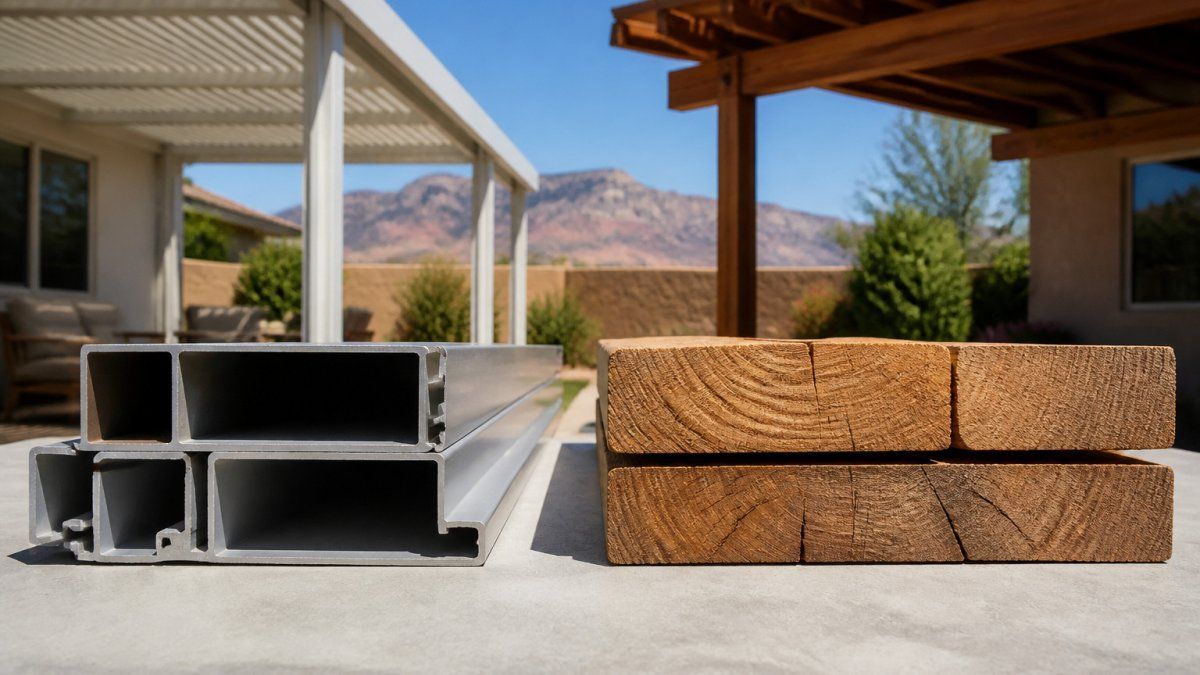
- Material: wood costs less upfront but needs maintenance; aluminum and steel cost more and last longer
- Attachment: tying into an existing roof costs more than a freestanding build
- Site prep: slope, soil, and access all affect labor
- Permits and engineering: required in many jurisdictions and priced separately
Budget Tiers and What They Buy
Think in tiers rather than exact figures. A modest entry-level build buys a simple freestanding structure or a quality set of furniture covers. A mid-range budget buys an attached pergola with real footings. The upper tier buys an engineered solid roof integrated with the home. For current pricing on your specific project, request a quote from D.A.D.S. Construction.
Sizing, Fit, and Furniture Protection: Measuring Before You Buy
Fit mistakes drive most cover returns, and almost no guide walks through the measurement itself. Here is the method to use before you order, whether you are buying furniture covers or planning a structural cover.
Measuring Furniture for Covers
- Measure the widest point, not the base. Sofa arms, reclined backs, and chaise footrests push past the frame. Run the tape across the outermost points.
- Measure the tallest point. A high back or an open umbrella hole sets the height the cover must clear.
- Measure depth front to back at the deepest point, including any reclined section.
- Add slack. Two to four inches of extra length and width lets the cover drape instead of stretching. A cover pulled tight at the seams tears within a season.
- Check the drop. Confirm the cover hem clears the ground enough to let air move but not so much that wind gets under it.
Measuring for a Structural Cover
- Footprint: measure the length and width of the area you want shaded, then add the overhang you want past the seating.
- Attachment wall height: measure from the patio surface to the height where the cover would tie into the house. This number decides the roof pitch.
- Ground slope: check the patio across its length and width. A slope changes post heights and footing depth.
- Clearances: confirm headroom above doorways, steps, and grill zones. A beam that clips a door swing is a rebuild.
- Setbacks: note property-line setbacks and easements before you plan posts near a fence.
Matching Cover Shape to Furniture Shape
A sectional needs a sectional-sized cover with room for the corner. A dining set cover needs enough height for chairs pushed in and a table umbrella if one stays up. Off-the-shelf covers rarely match odd shapes, which is where custom-made options earn their cost. For structural covers, an L-shaped patio needs an L-shaped roof or two connected spans; a single rectangle leaves the corner exposed.
- Furniture measured at widest and tallest points
- Slack added for drape
- Wall height recorded for structural attachment
- Ground slope checked
- Doorway and step clearances confirmed
- Setbacks noted
- Custom versus off-the-shelf decided
Permits, Installation, and Care: What Homeowners Overlook
Permits and installation requirements vary by jurisdiction, and they are the step homeowners most often skip. Attached structures typically need a building permit and sometimes engineering review; freestanding shade sails may need less. Confirm requirements with your local building department before you buy anything.
Installation quality decides lifespan. Posts need proper footings below frost line and above wind load. Fasteners need the right anchors for your wall material. Care is simpler: rinse furniture covers monthly, re-seal wood annually, and store fabric covers dry to prevent mildew.
Conclusion
Getting covers for a patio right comes down to one decision: are you shading a space or shielding furniture? Answer that first, and the material, size, and budget questions get much easier. D.A.D.S. Construction has built custom outdoor living spaces across the region for over 30 years, with veteran-owned craftsmanship behind every pergola, patio cover, and sunroom. We handle the design, the permits, and the build so your patio works year-round. Contact us for a quote on your project.
Frequently Asked Questions
What is the cheapest way to cover a patio?
Fabric furniture covers and a patio umbrella are the lowest-cost entry points, and a shade sail sits just above them. Patio cover kits cost more but deliver permanent shade. Structural builds, including pergolas and solid roofs, carry the highest price because of materials, labor, and permitting. Pricing depends on size, materials, and site conditions, so request a quote rather than relying on national averages.
Are pergolas or solid patio covers better for weather protection?
Solid covers win on weather protection. A solid roof with attached gutters sheds rain, blocks UV, and keeps furniture dry through monsoon season. Pergolas with open slats provide partial shade and airflow but let rain and direct sun through unless you add a solid or louvered top. In desert climates, many homeowners pair a pergola frame with a solid roof panel to get shade without a fully enclosed feel.
How much does a 20x20 patio cover cost?
A 20x20 cover (400 square feet) is a large span, and cost depends on material, roof type, attachment method, and permit requirements. Kit versions cost less than custom-built structures but may need engineering for wind and load. Because pricing varies by site and specification, ask a contractor for a written quote that separates materials, labor, and permits so you can compare bids fairly.
What should I consider when choosing a patio cover?
Start with how you will use the space: full shade and rain protection call for a solid roof, while partial shade and airflow suit a pergola or shade sail. Then check attachment to the house, local permit rules, wind and snow loads, and material lifespan. Measure furniture footprints before buying covers, and confirm whether you want a DIY kit or professional installation.
GARAGE DOOR INSIGHTS
More from Liftworks Overhead Door Services