Latest insights
How to Choose a Patio Cover Contractor in Southern Utah

October 29, 2026
By D.A.D.S. Construction
Table of Contents
- Why Choosing the Right Patio Cover Contractor Matters in Southern Utah
- Step 1: Verify Licensing, Insurance, and Bonding
- Step 2: Build a Patio Cover Contractor Checklist for Vetting
- Step 3: Read Patio Cover Contractor Reviews Critically
- Step 4: Ask the Right Questions Before You Hire
- Step 5: Compare Patio Cover Estimates Line by Line
- Booking Your Patio Cover Project With D.A.D.S. Construction
- Frequently Asked Questions
Last Updated: October 29, 2026
Why Choosing the Right Patio Cover Contractor Matters in Southern Utah
Hiring the wrong patio cover contractor can cost you more than money. A poorly built cover can fail in high winds, leak after the first summer storm, or never get finished at all. In Southern Utah, where summer heat and intense sun are part of daily life, a well-built patio cover is more than a shade structure. It is a space your family will use for years.
Choosing the right contractor usually decides whether a patio cover project feels worth it a year later. This guide walks through how to choose a patio cover contractor in southern Utah, one practical step at a time.
Many homeowners assume the lowest bid is the safest choice, but a cheap quote can mean fewer materials or missing permits. Treat price as one factor among several.
Step 1: Verify Licensing, Insurance, and Bonding
Start with the basics before you look at designs or prices. Ask for the contractor's Utah license number and confirm it on the state's licensing lookup. You can also check the Coverage Area to confirm the contractor serves your city. Then request a certificate of insurance that covers general liability and workers' compensation. Ask the insurer to send the certificate directly to you.
- Confirm the license is active and matches the business name on your contract
- Check that general liability and workers' compensation coverage are current
- Ask whether the contractor carries a bond
- Verify the contractor's address matches the business you are hiring
A common mistake is trusting a certificate that was emailed by the contractor. Always contact the insurance agent yourself to confirm.
For a full overview of what to look for in a contractor, see St George's Complete Outdoor Living Guide: Decks, Pergolas, Patio Covers and Enclosures Compared. It explains how the main outdoor structure types differ, which helps you know what to vet for.
Step 2: Build a Patio Cover Contractor Checklist for Vetting
Most directory pages tell you to "hire a reputable contractor" and stop there. The useful work is turning that advice into a checklist you can actually score. Build one before your first call so every contractor is measured the same way, and keep the completed sheets side by side when you decide.
Company and experience checks
- How many years has the business operated under its current name and license? Ask for the license number and the start date, then confirm both on the state licensing lookup.
- Does the contractor specialize in patio covers, or is this a side offering between roofing and remodeling jobs? Ask how many patio covers they completed in the past 12 months.
- Can they show three to five recent projects within a reasonable drive of your home? Photos are fine, but a drive-by of a finished cover tells you more about framing, flashing, and finish work.
- Do they carry general liability and workers' compensation coverage, and will the insurer send the certificate directly to you? A certificate forwarded by the contractor is easy to fake or misdate.
Scope and process checks
- Who pulls the building permit, and is the permit fee included in the bid or billed separately?
- Who supervises the crew on site each day, and is that person the same one who gave you the estimate?
- What is the written schedule, and how are weather delays communicated?
- How are change orders priced and approved in writing before work continues?
- What is the cleanup and haul-away plan, and is disposal included?
Reference checks
Ask for two or three references from projects finished in the past year, and call them. Useful questions: Did the crew show up when promised? Was the final invoice close to the original bid? Did the contractor return calls after the final payment? A reference who hesitates on the last question is telling you something.
Red flags to score down
- A license number that does not match the business name on the contract
- A large deposit request before any materials are ordered or permits pulled
- No written contract, or a contract with blank scope and payment sections
- Pressure to sign "today" for a discount that expires
- Vague answers about who supervises the crew or who pulls permits
For a full overview of what to look for in a contractor, see St George's Complete Outdoor Living Guide: Decks, Pergolas, Patio Covers and Enclosures Compared. It explains how the main outdoor structure types differ, which helps you know what to vet for.
Score each contractor against the same checklist. The table below summarizes the red flags to watch for.
| Red flag | Why it matters |
|---|---|
| License number does not match contract name | Confirms who is actually responsible for the work |
| Large deposit before materials or permits | Money is at risk before any work starts |
| No written contract or blank sections | Scope and payment terms are unenforceable |
| Pressure to sign today | Discounts that expire are a sales tactic |
| Vague answers on supervision or permits | Problems surface later without clear accountability |
Step 3: Read Patio Cover Contractor Reviews Critically
Online reviews are useful, but they need context. Look at the overall pattern rather than one glowing or angry comment. Check several sources, including Google and the Better Business Bureau, and note how the contractor responds to complaints.

Pay close attention to reviews that mention timelines, communication, and cleanup. Those details tell you more about the daily experience than star ratings alone. A contractor who answers criticism calmly and fixes problems is often a better bet than one with a perfect score and no detail.
Ask for references too. Speak with at least two past customers in your area, and ask whether the project finished on schedule and stayed within budget.
Step 4: Ask the Right Questions Before You Hire
Good questions reveal how a contractor works. Prepare a short list and ask each contractor the same things.
- Who will supervise the crew on site each day?
- What is the expected timeline, and what could delay it?
- Who pulls the permits, and what does that cost?
- What warranty do you offer on labor and materials?
- How do you handle change orders?
- Can I speak with a recent customer?
Pay attention to vague answers. If a contractor cannot explain the timeline or the warranty clearly, expect problems later.
For common homeowner questions, see the Common Questions page before you call.
Step 5: Compare Patio Cover Estimates Line by Line
Two bids for the same patio cover can differ noticeably because they describe different scopes. The fix is to normalize the bids before you compare totals. Ask every contractor to quote the same written scope, then check each bid against the line items below.
What a complete patio cover bid should itemize
- Cover size and dimensions, with a simple drawing or dimension sketch
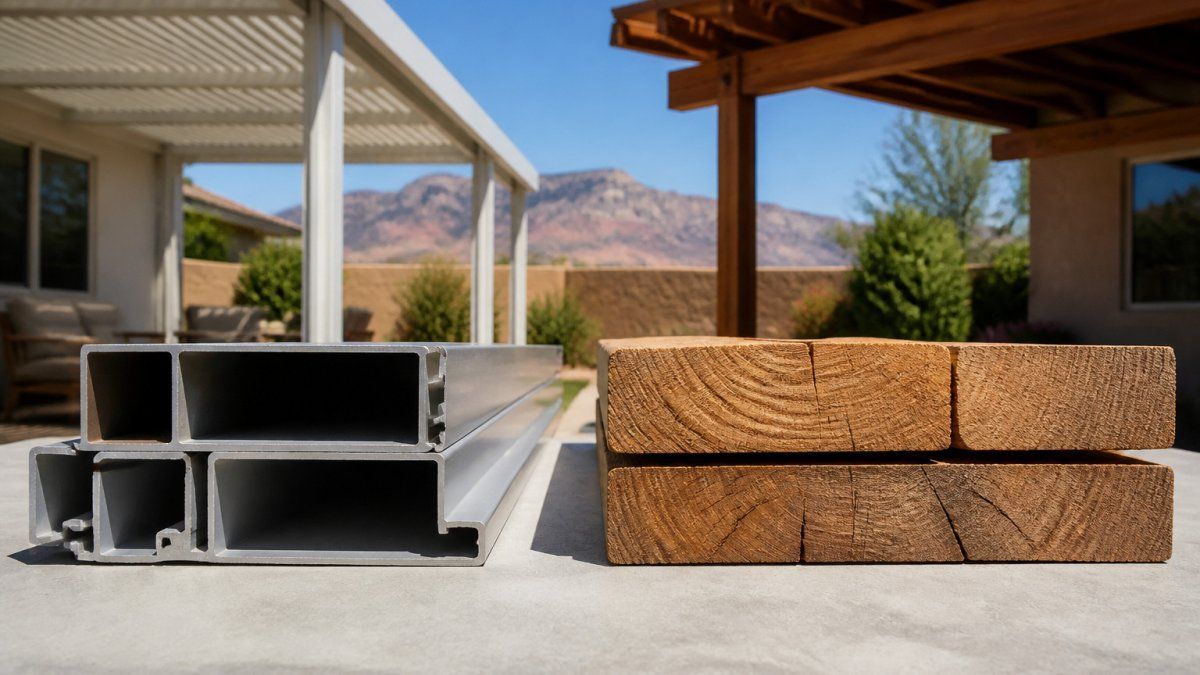
- Framing material and size (for example, nominal lumber dimensions or aluminum beam profiles), plus connection and anchor details
- Roofing or shade material, including product name, color, and thickness or gauge
- Footings: size, depth, concrete quantity, and whether they are included
- Flashing and attachment details where the cover meets the house
- Permit fees and who pulls the permit
- Labor, cleanup, and debris haul-away
- Warranty terms for labor and for materials, in writing
Normalize before you compare
If one bid includes footings and another lists them as "by others," the totals are not comparable. Add the missing items to the lower bid using the other contractor's line price, or ask the lower bidder to re-quote with the same scope. Do this for permits, flashing, painting or finish, and disposal, the four items most often left out to make a bid look cheaper.
Watch allowances and exclusions
An allowance is a placeholder dollar amount for a material the contractor has not finalized, such as a specific roof panel or fan. If the allowance is low, the final invoice rises when you choose the real product. Ask what happens if the actual material costs more than the allowance. Read the exclusions list closely: structural repairs, electrical for fans or lights, painting, and HOA approval are common exclusions that become change orders.
Compare payment schedules, not just totals
A reasonable schedule ties payments to milestones: a deposit to order materials, a progress payment when framing is complete, and a final payment after inspection and cleanup. Be cautious with a contractor who wants most of the money up front or asks for cash with no receipt. Every payment should reference the written contract and change orders should be signed before work continues.
Pricing depends on size, materials, site access, and schedule, so exact figures vary by project. Use the bids to see what each contractor includes, not just what each one charges. For current pricing or a quote, contact D.A.D.S. Construction through its website.
Booking Your Patio Cover Project With D.A.D.S. Construction
Once you have verified licenses, checked references, and compared estimates, you are ready to choose. D.A.D.S. Construction builds custom outdoor living spaces, including patio covers, pergolas, and sunrooms, across Southern Utah. Contact the team to talk through your space, your goals, and your budget. For details on the services offered, visit the Patio Covers page.
Frequently Asked Questions
How do I find a reliable patio cover contractor?
Start with contractors who hold an active Utah contractor license, carry general liability and workers' compensation insurance, and have a physical business address in Southwest Utah. Ask for recent references from completed patio cover projects in the area, and call at least two of them. Check the license number on the Utah Division of Occupational and Professional Licensing website, and confirm the company name on your estimate matches the name on the license and insurance certificate. Contractors who answer these questions readily are usually the ones who finish what they start.
What should a patio cover estimate include?
A complete patio cover estimate lists the cover type, roof material and pitch, post and beam sizes, footing details, lumber grade, fasteners, finish or stain, demolition and cleanup, permit fees, and project timeline. It should also name who pulls the building permit and who schedules inspections. Pricing depends on size, materials, site conditions, and local permit requirements, so ask D.A.D.S. Construction for a written quote based on your specific property rather than relying on general price ranges. Any estimate without line items is hard to compare with others.
How many quotes should I get for a patio cover project?
Three written quotes from licensed contractors is a practical minimum for a patio cover project. Give each contractor the same specifications, including dimensions, material preferences, and the cover style you want, so the bids are comparable. A bid that is far lower than the others often means missing line items, thinner materials, or no permit included. Ask each contractor to explain any significant difference in price before you decide.
What warranty should a patio cover contractor provide?
Ask for a written workmanship warranty that states how long it lasts, what it covers, and how claims are handled. Many residential contractors offer one-year workmanship coverage, and manufacturers usually provide separate warranties on roofing panels, fasteners, and finishes. Confirm whether the warranty is backed by an active business that will still exist in the future. Keep the warranty document with your project records and your permit file.
GARAGE DOOR INSIGHTS
More from Liftworks Overhead Door Services